Client work · via Starline Labs
VitalzHub
A healthcare platform that turns lab reports into plain-English health plans. I built the prototype solo; it got funded, and then I rebuilt it as a full platform.
shippedNov 2025 – Present
My roleSolo engineer on the prototype; one of two engineers on the platform
- after stakeholder approval in Dubai
- Funded
- after stakeholder approval in Dubai
- user roles, from patient to doctor
- 5
- user roles, from patient to doctor
- engineer on the prototype
- Solo
- engineer on the prototype
01The problem
In the UAE, people get bloodwork back as PDFs from different labs, in different formats, with no easy way to see trends or know what to do next. The client needed a prototype good enough to raise funding, and then a real platform that doctors could trust.
02What I built
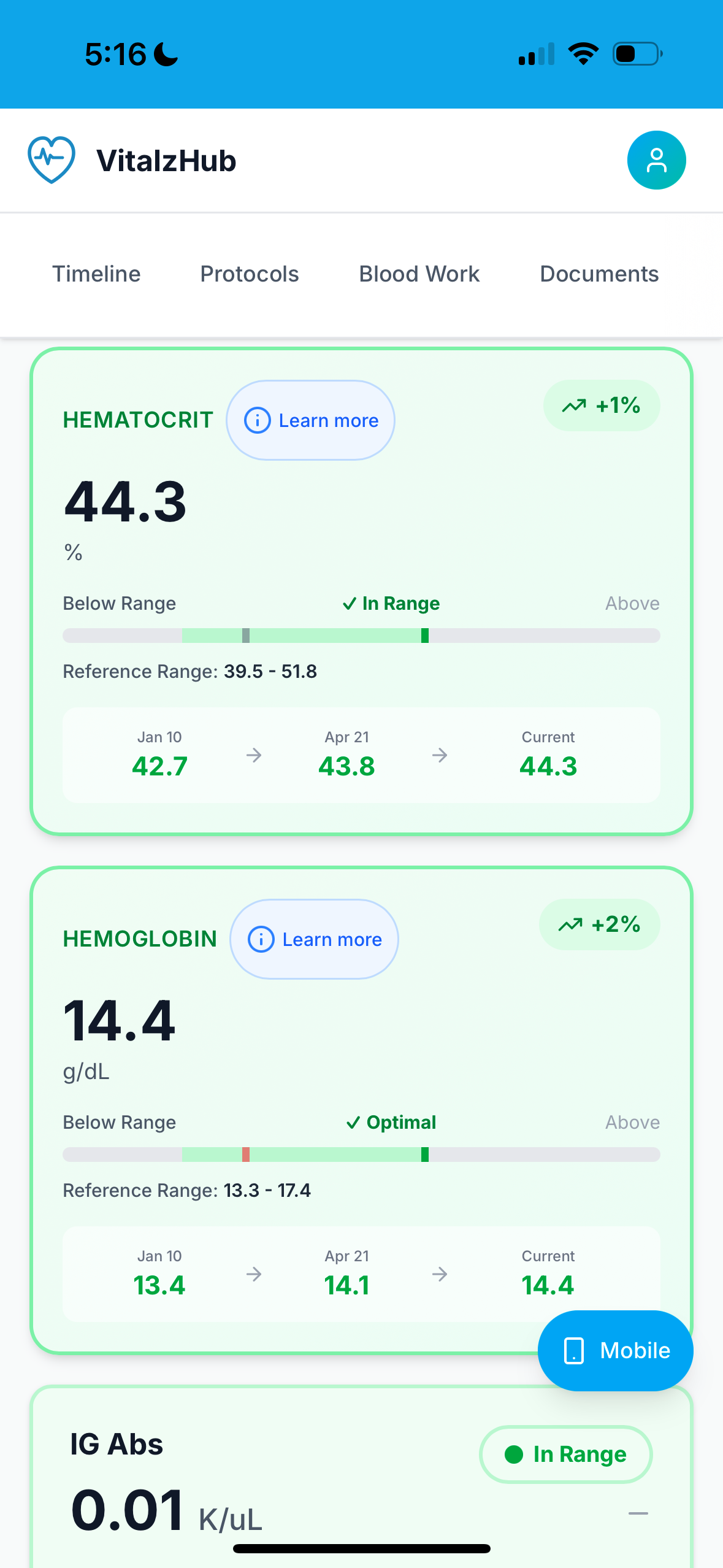
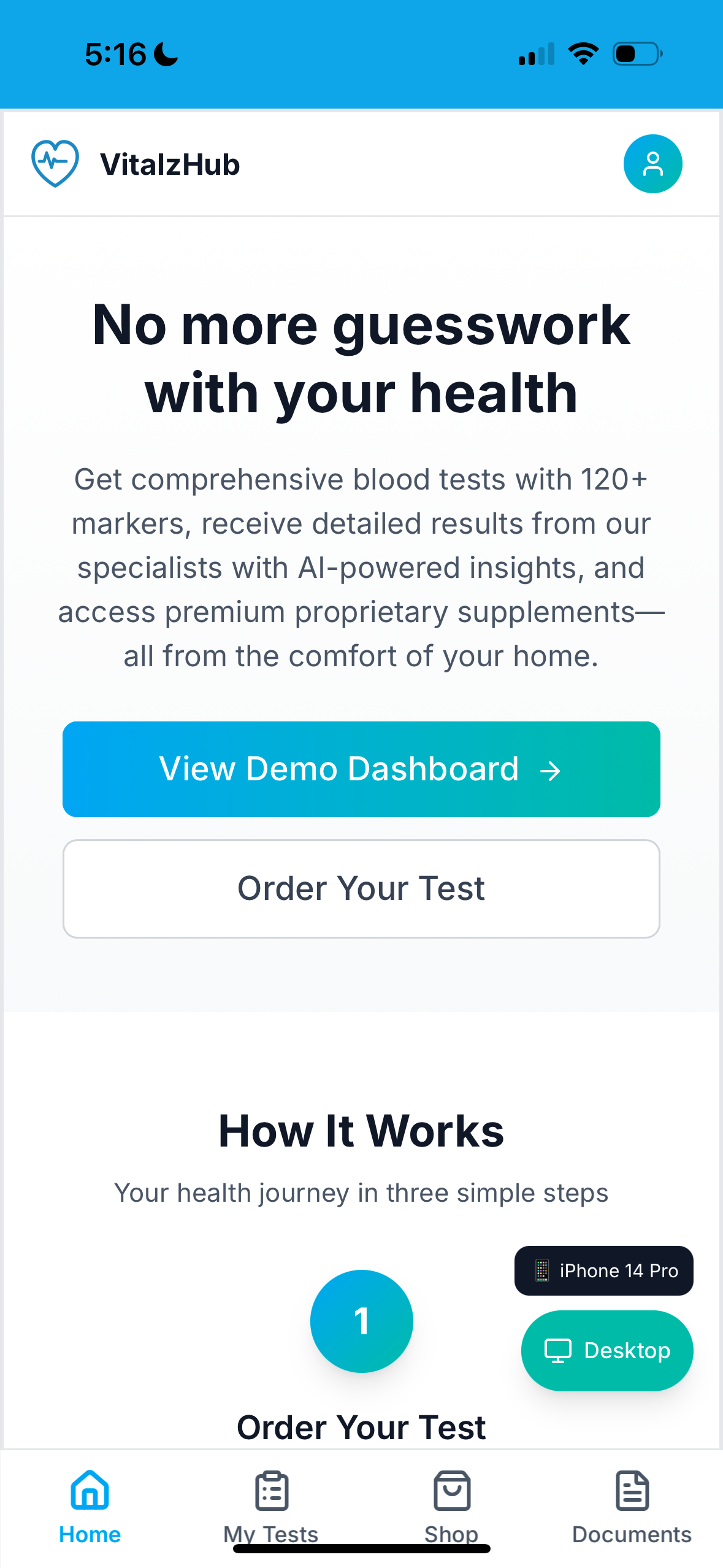
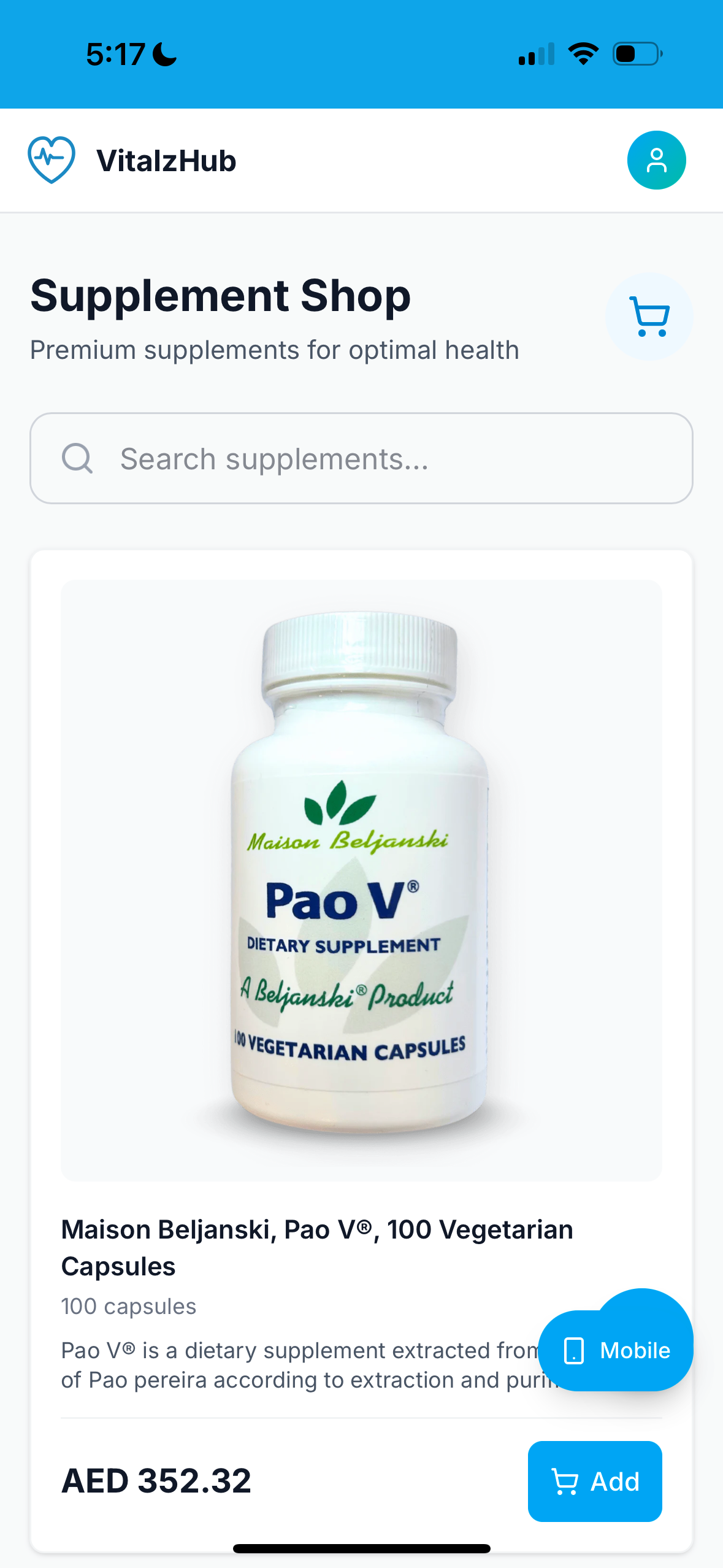
- The prototype, solo: a Next.js app wrapped for iOS and Android with Capacitor, with bloodwork history, trend comparisons, plain-English explanations of each marker, and a supplement shop
- A Python service using Docling to pull tables and values out of lab-report PDFs
- The platform, with one other engineer: a FastAPI backend and Next.js apps. My part was the patient app: lab results, progress tracking, and AI-drafted care plans with PDF export and Arabic support
- Role-based access for 5 user types (patient, nurse, practitioner, doctor, admin), enforced by a test that checks every API route
- Lab-report ingestion for 2 lab vendors into a shared dictionary of 47 curated biomarkers (parser built by my teammate)
- AI-drafted care plans that a doctor reviews, edits, and signs off before a patient sees them
- Deployment on AWS (EC2, CloudFront) with GitHub Actions CI and end-to-end tests across every role
03Key decisions
A doctor signs off on every AI-drafted plan
- Why
- Health advice a model writes on its own isn't safe to show patients directly.
- Result
- The model drafts a plan section by section; a doctor reviews and signs it before release, and every step is logged.
Preview extracted lab data before saving it
Instead of: Fully automatic saving
- Why
- Values pulled from a PDF can't be trusted blindly when they're medical data.
- Result
- Users confirm what was extracted before it's stored.
Extraction built for real lab PDFs
- Why
- Lab reports differ in headers, tables, and units, and generic PDF extraction was inconsistent across formats.
- Result
- A Docling-based extraction step made results consistent across the labs we supported.
Test access control on every route
- Why
- With five roles, one forgotten permission check means one user can see another's health data.
- Result
- A test checks every API route against the role table, and a second test checks every page.
04Results
- The prototype earned stakeholder approval in Dubai and secured funding
- The platform runs on AWS with patient, staff, and lab-partner apps
- Every care plan passes a doctor's review before a patient sees it
05What I learned
- Health data needs a person in the loop: the AI drafts, and a doctor decides.
- Generic PDF parsing isn't good enough for medical data. Extraction has to be built for the documents you actually receive.
06Stack
- Next.js
- TypeScript
- FastAPI
- PostgreSQL
- SQLAlchemy
- Docling
- Capacitor
- AWS (EC2, CloudFront)
- Playwright
want the longer version?
I'm happy to walk through how I built it.